
Places That Don't Know They're Next
SafetyWing Nomad Creator Residency — Application Essay
The Next Wave of Nomad Cities: Where Freedom Becomes Sustainable
For a long time, I thought the goal of travel was movement.
New countries, new landscapes, new experiences—an ever-expanding map of where I had been. And for a while, that felt like freedom. But over the past few years, as I’ve moved more deeply through the world, I’ve started to question what it actually means to live globally—not just pass through it.
I qualified as a physiotherapist and worked for a while before I left the first time.
Not because I didn't find meaning in it — I did, genuinely. There's something about helping a person walk again, or watching someone who arrived in pain leave without it, that stays with you. But I'd had a taste of being somewhere else entirely, and I couldn't unfeel it.
So I left. Two years of solo travel across 45+ countries — Southeast Asia, North Africa, South and Central America, Europe, living out of one bag, making content the whole way. Then I came back to Melbourne and returned to physio, because the responsible thing and the exciting thing aren't always the same thing, and I was trying to hold both.
But I've been honest with myself about where I'm heading. The clinical work gave me something I didn't expect — a particular way of looking at sustainability, at what it actually costs a body and mind to keep doing something over time. That question lives in my photography and writing now more than it does in any treatment room. And this time, when I leave, I'm not planning to come back to the same thing. I'm building toward something else: freelance creative work, documentary projects, brand collaborations — a life built around The World Scrapbook rather than one that happens alongside it.
This residency sits right at that threshold.
The Proposal
I want to go somewhere that hasn't quite been named yet.
Not Bali. Somewhere in the gap between discovery and saturation — where the infrastructure is real but the culture hasn't been flattened by it yet. Where you can still feel the texture of a place rather than the version of it that exists for people like me.
The four destinations I've chosen are places that I have previously been to and would absolutely return to, each representing a different answer to what nomad living might actually look like when it grows up:
Tbilisi, Georgia is the one that keeps surprising me. Visa-free for up to a year, genuinely affordable, culturally intact in a way that most European cities aren't anymore. It doesn't feel like it's performing for outsiders yet. I want to understand the tipping point — how close it is, what happens when it arrives, and whether the balance it currently holds is structural or just lucky timing.
Cusco, Peru is the difficult one. High altitude, logistical friction, nothing particularly optimised for remote work. Which is exactly why I'm interested in it. I run and hike, and I've spent enough time in mountains to know that hard environments tend to strip things back in useful ways. Cusco asks a question the other destinations don't: what if ease isn't actually what makes a place sustainable to live in?
Florianópolis, Brazil doesn't fit the usual nomad narrative, which is part of why I'm drawn to it. An island city in southern Brazil with over forty beaches, a lagoon neighbourhood — Lagoa da Conceição — that pulses with surf culture, street art, young creative energy and enough café infrastructure to actually get work done. It has the bones of what Bali was before Bali knew what it was becoming.
What interests me here isn't just the aesthetics, though the light alone is worth the flight. It's the tension between a place with a genuinely strong local identity — Brazilian in a way that resists dilution — and a growing international layer that's arriving quietly, without the fanfare that usually precedes saturation. The surf community gives it rhythm. The creative scene gives it texture. And the fact that most people outside Brazil haven't fully clocked it yet gives it something rarer: the feeling that you arrived at the right time.
I want to find out whether that feeling is real, or whether it's the story every nomad tells themselves about every new place they love.
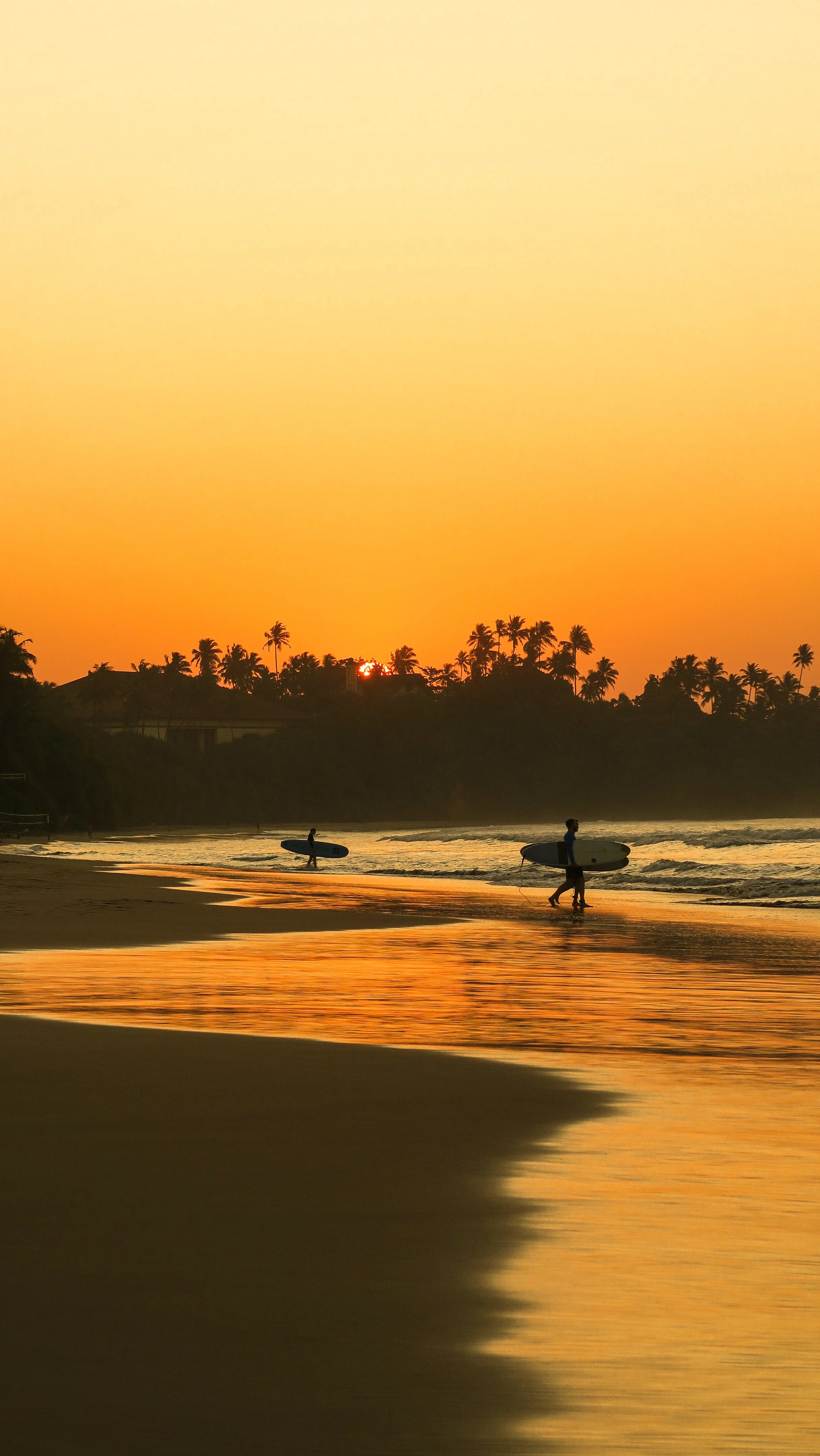
Imsouane, Morocco (bonus) is personal. I surf. I run. I need to be near the ocean and I need to move my body the way that place demands you move it — by tide, by light, by the rhythm of water rather than a calendar. Imsouane is a micro-community built entirely around that kind of alignment, and I think it represents something real about where a certain type of nomad living is heading: not global, not optimised, just deeply in tune with one environment.
Across all four, I'll look at the practical things — cost, wifi, visa pathways, safety — but honestly, those are the easy parts. What I'm actually trying to capture is harder: what it feels like to wake up in a place and not immediately want to leave it. The specific quality of belonging that takes weeks to arrive, if it arrives at all. The moment a city stops being somewhere you're visiting and starts being somewhere you live.
I've spent a long time moving. I know what it feels like to be a tourist in your own routine. This residency is my attempt to find out what comes after that — and to document it honestly, in the way I know how: film, photography, and writing that tries to tell the truth about a place rather than sell it.
The next Bali won't announce itself. It'll just be the place where people kept staying.
I want to find it before everyone else does.
A few things that distinguish what I'd produce:
My clinical background means I look at places differently — not just aesthetically, but functionally. I'm interested in what a location actually does to a body and mind over time: the sleep quality, the air, the food, the distance between things. That lens produces different content from the usual nomad narrative.
I work across three mediums — film, photography, writing — which means a single experience becomes layered coverage rather than a single post. My most recent collaboration (a short film, photography suite and written feature for Xanadu Surf Retreat in Lombok) is a model for what I'd deliver: view here.
And I travel solo, which means the content is intimate. There's no crew, no performance. Just a person in a place, paying attention.