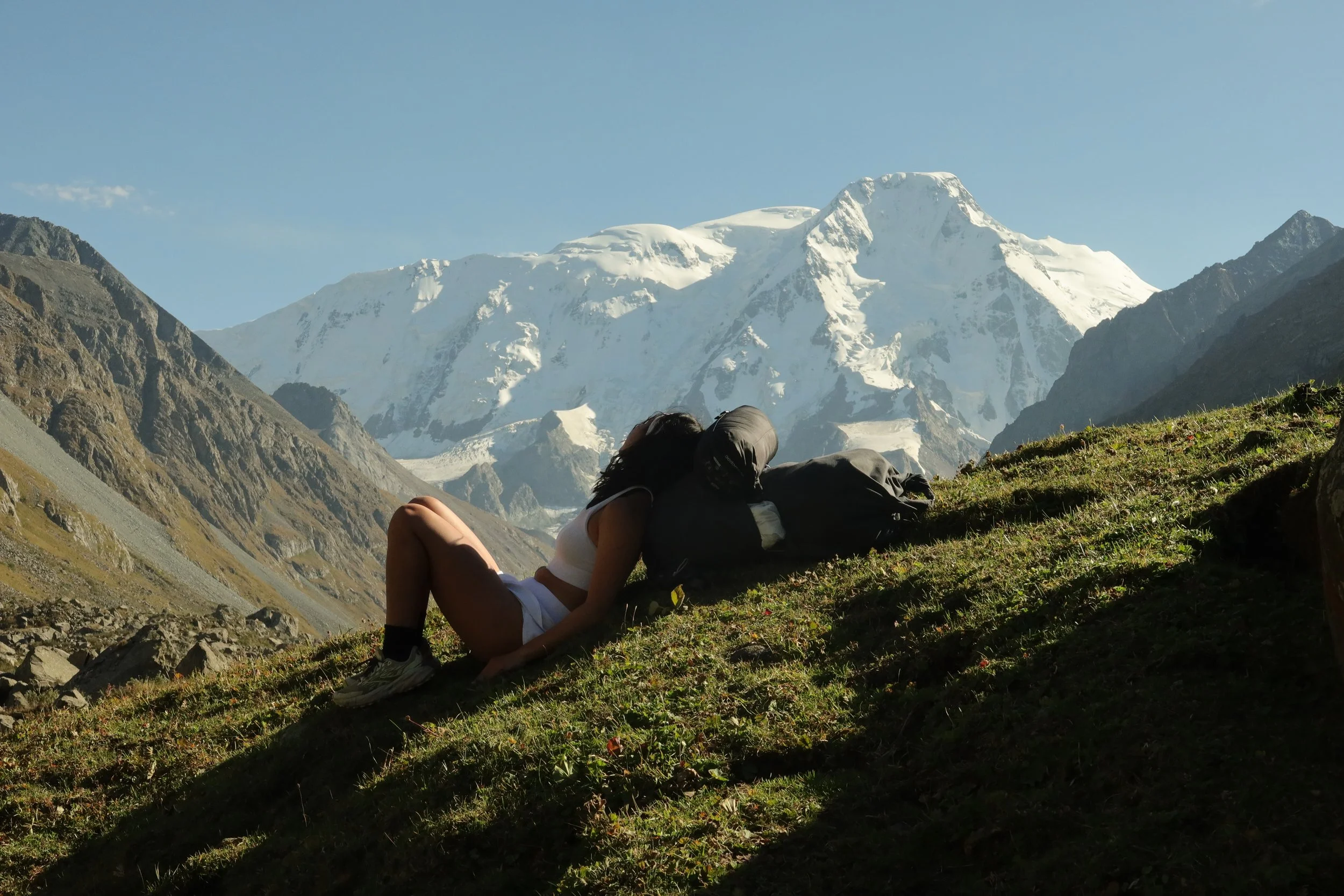
Pages from Kyrgyzstan
A personalised itinerary through the wild heart of Central Asia; hiking, yurts, horses, friends and high-altitude adventure.
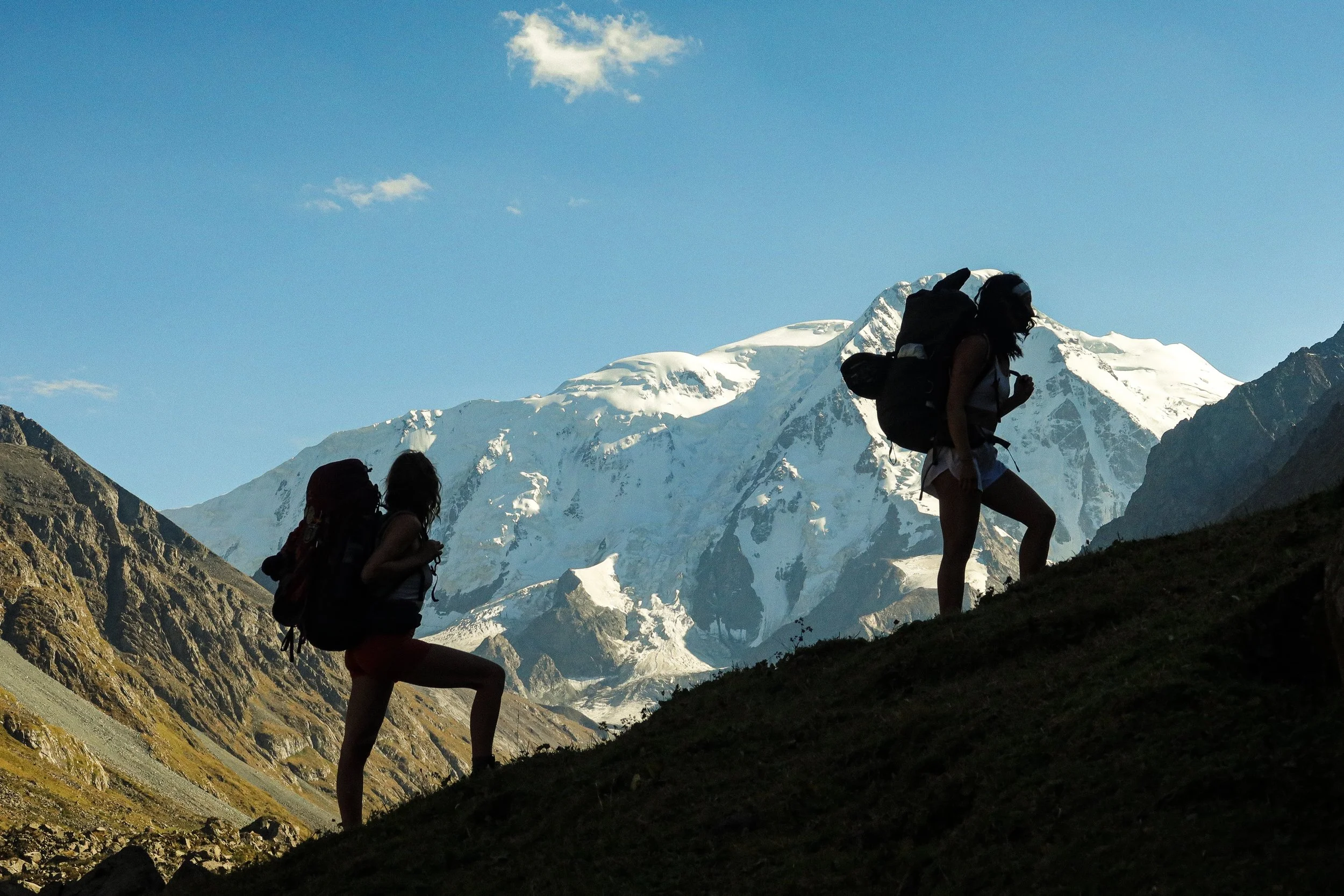
Last summer, I landed in Kyrgyzstan and felt completely unprepared for it — for how vast and wild it still is. Three surreal weeks in, I was watching landscapes so beautiful they barely felt real, wondering how a place like this had stayed so under the radar. I’d been lured in by the very Instagram-fuelled travel propaganda I claim to resist — and somehow, it still undersold the place.
I have a mildly toxic relationship with the internet’s ability to turn places like this into trending content — and yes, writing this means I’m part of the problem.
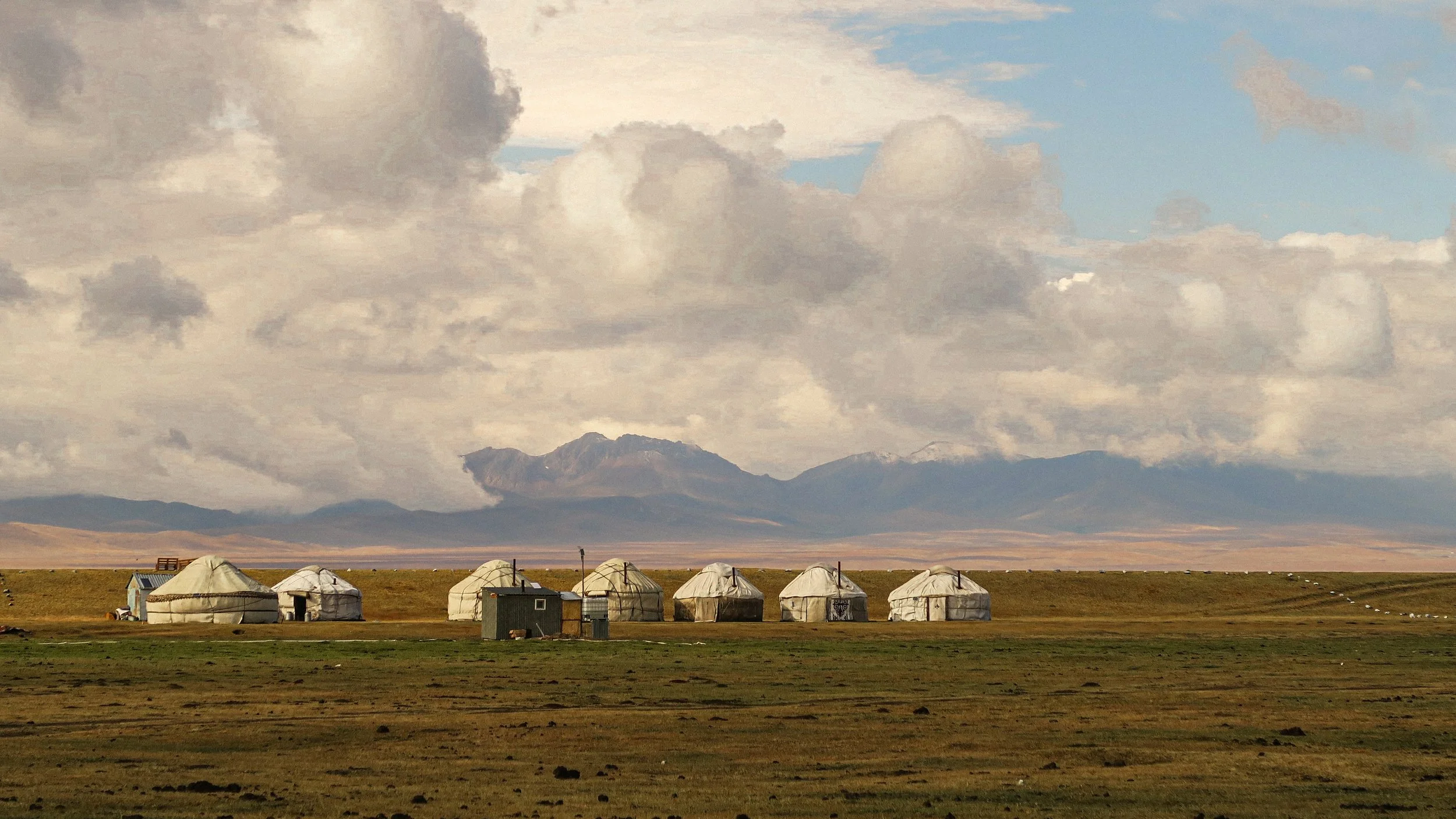
Song-Köl Lake
Everyone deserves a summer in Kyrgyzstan.
Since this has easily become the destination I’m asked about most, here’s my fun little rundown of the trip — our spontaneous itinerary, a few tips, the challenges, and the moments that permanently rewired my brain. Informative and personal, with minimal spoilers.
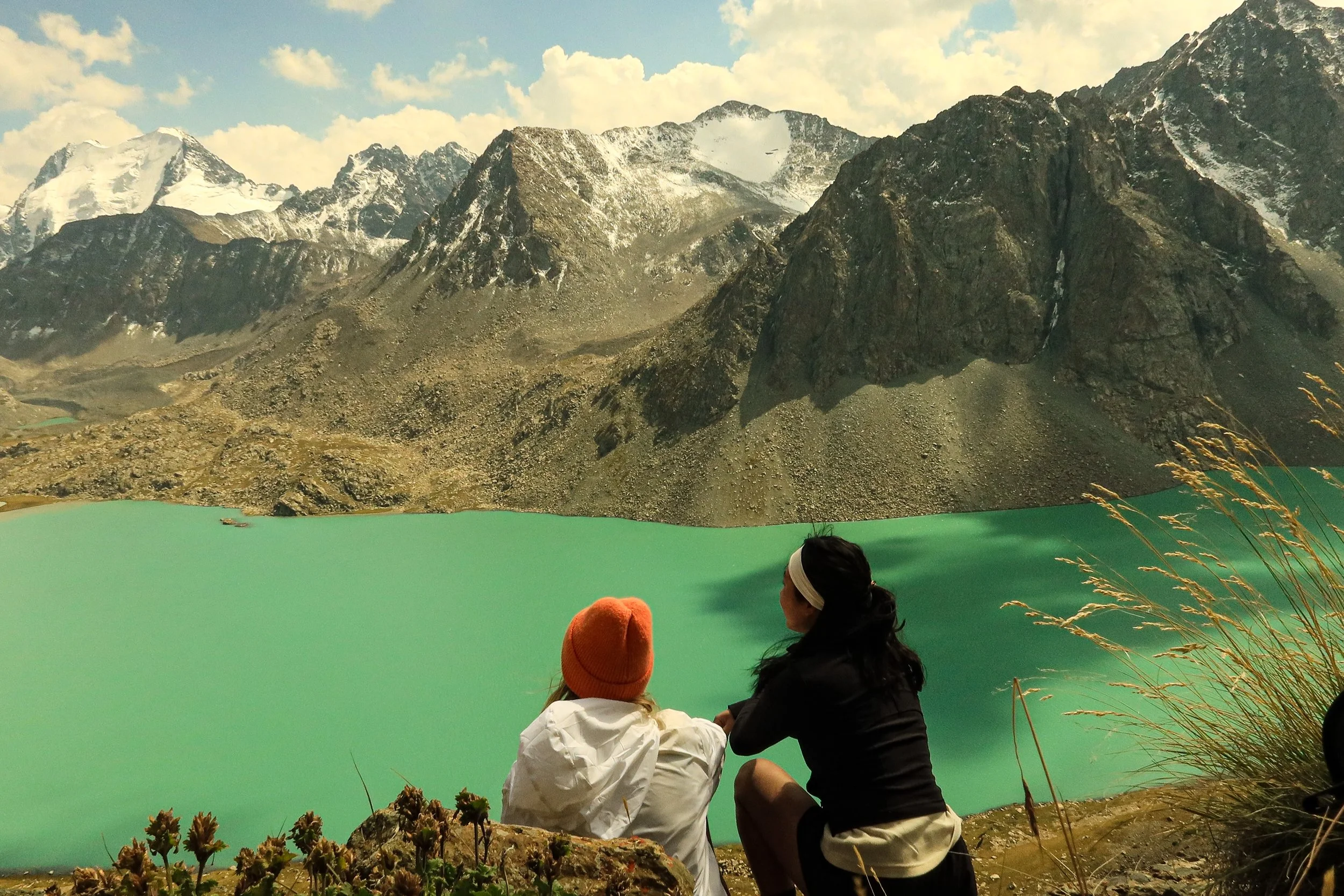
Ala Kul Lake
The Planning
Two very sleep-deprived girls sit hunched over cups in a Bishkek café, operating on caffeine and blind optimism.
The Dutch girl casually pulls out a worn tobacco pouch, unfolding a small parade of rituals — papers, a filter, a pinch of tobacco — her fingers moving with the precision of someone deeply committed to the process.
Across from her, the Australian girl downs what is probably her fourth glass of ice water.
“Okay… so what’s our plan?”
A freshly printed Google Images map is dramatically spread across the table. With a pen, the Australian girl draws an anti-clockwise loop around Kyrgyzstan.
“I think we should just lap the whole country. Osh is only ten hours away — we could start there.”
Only ten hours.
“I guess we do have three weeks,” the Dutch girl shrugs, gently tapping her already-finished cigarette into the ashtray. “That’s heaps of time. Let’s leave tomorrow.”
Tomorrow arrives.
The girls do not go to Osh.
Every detail of the plan goes directly in the bin. Instead, they board a marshrutka to Song-Köl and spend the next three weeks going quite literally where the wind takes them: East.
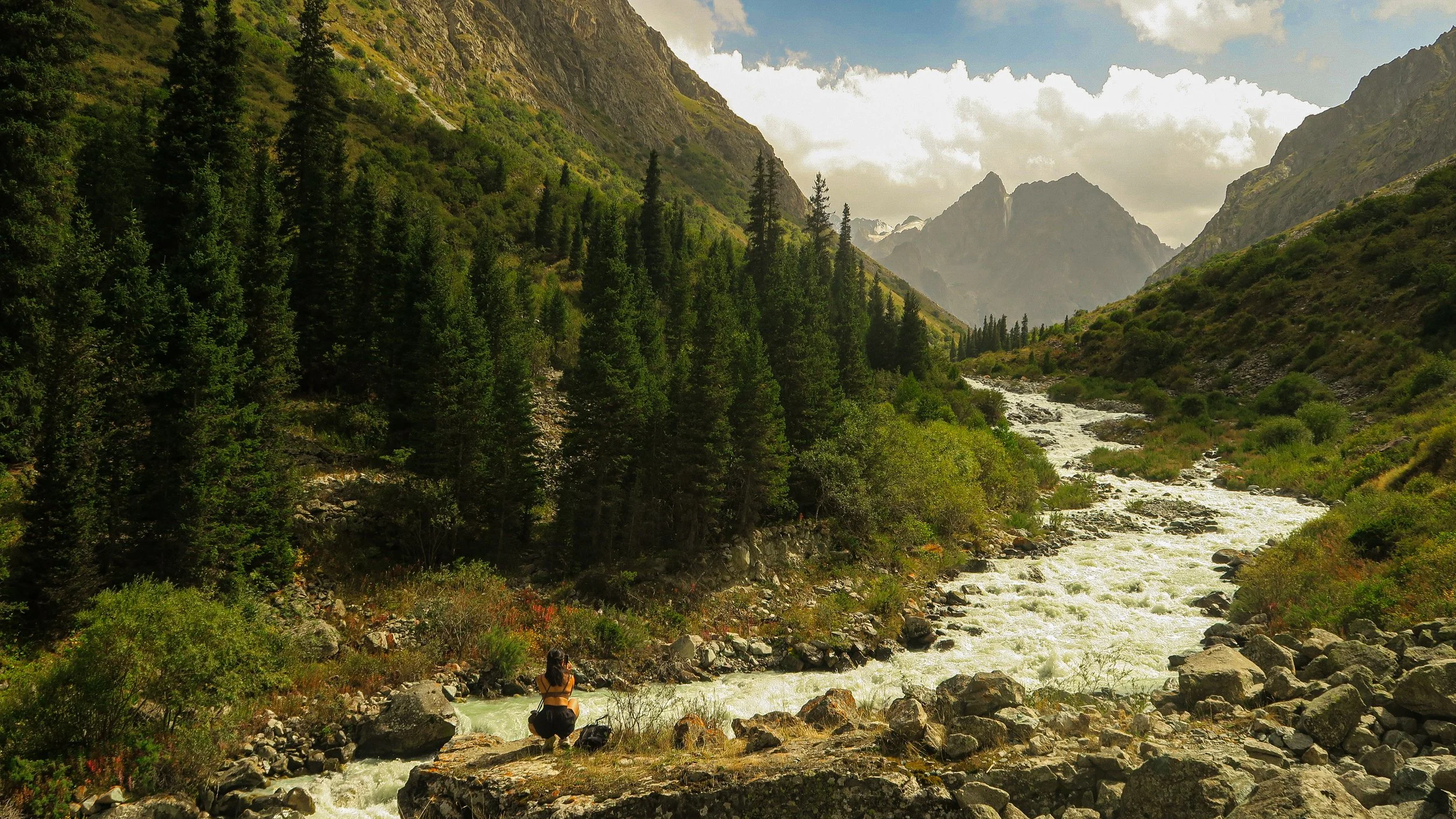
Ala-Archa National Park
Bishkek (2 Days)
Two days exploring the city and getting a feel for Kyrgyz culture, while stressfully hunting down gas, extra camping gear, and dried fruit and nuts from the markets.
We stayed at Ololo Hostel and left half our unessential gear in the storage room, knowing we’d be back by the end of the trip. Lieja and I split a private room, which was only $30 — hostel dorms are of course available too if you’re travelling solo.
Must-dos: Osh Bazaar, Ala-Archa National Park, breakfast at Oliva’s. Walk around and get a feel of the streets and people. Mosques, tiny museums, local parks.
We took a marshrutka to Ala-Archa National Park — an easy day trip I’d recommend doing first, as a baby taste of what Kyrgyzstan’s mountains have to offer. Save it for the end and it might feel underwhelming.
Then the journey really began.
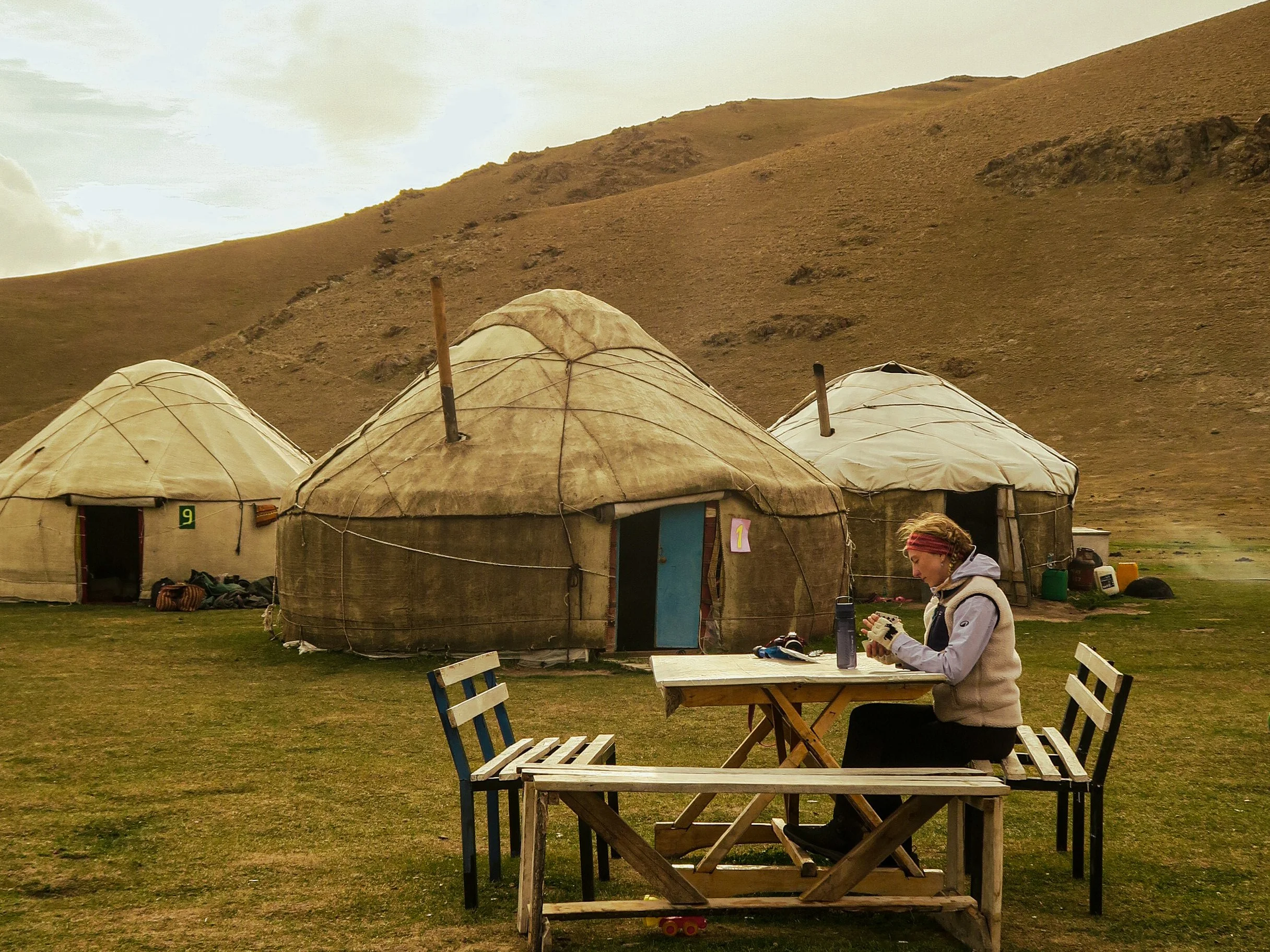
Song-Köl Horse Trek (3 Days)
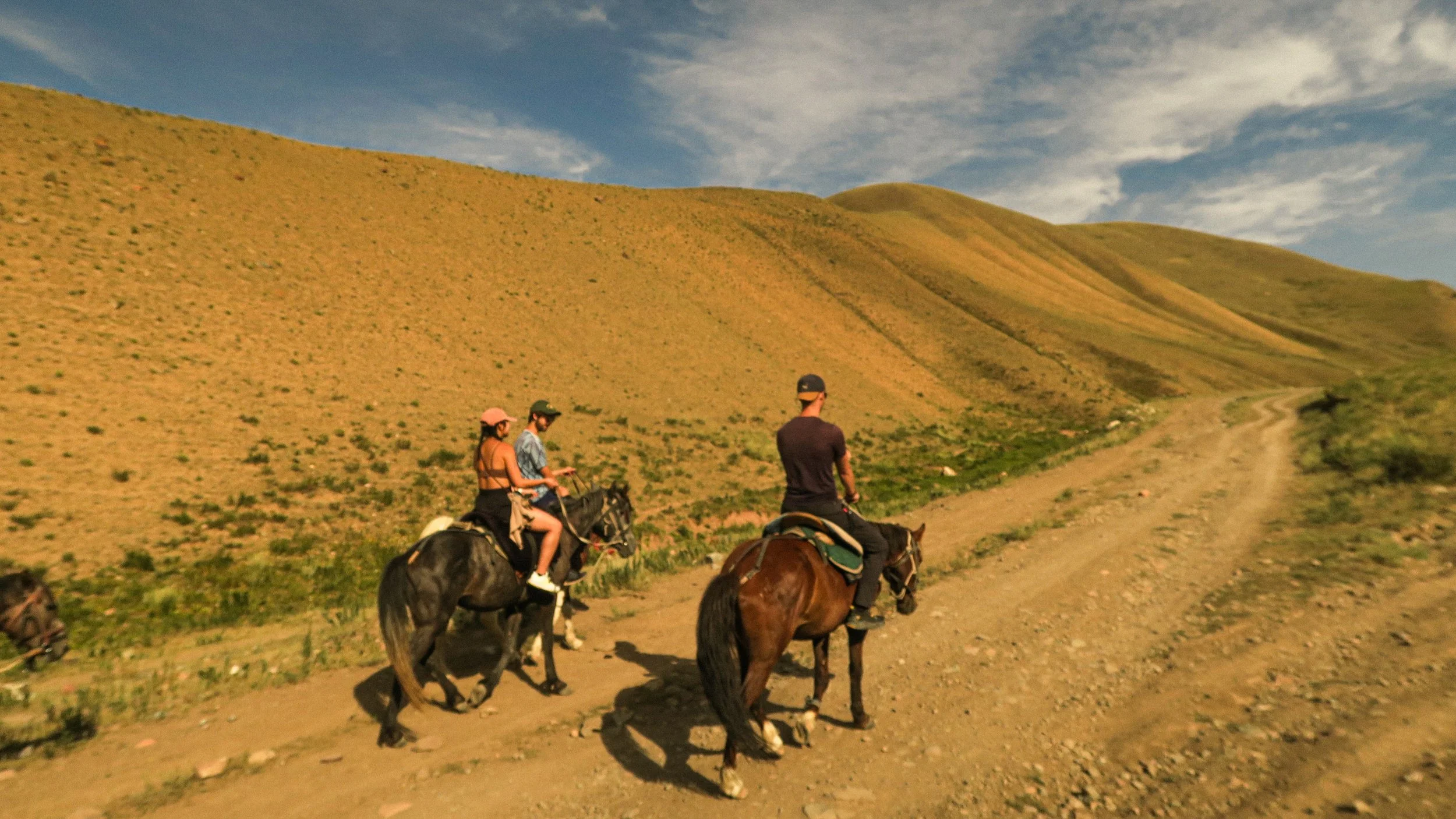
This is the part where I tell you the magic came with a price tag attached.
Disclaimer: I won’t name the organiser we went with (hint: Apple Hostel). We booked this tour on a popular recommendation, since hostels and word-of-mouth options are limited in Bishkek, especially for budget-stripped backpackers — so it was both affordable and easy to arrange. We were assured the horses were well treated, but we saw otherwise. Mine, who I named Ezra, was often hungry, fatigued, and had visible patches of blood. That said, we later met other travellers who’d found far more ethical operators running smaller groups. Please, please, please do your research before any horse trek in this country (or most countries, really) — going with a smaller operator, even a single private guide with good communication and genuine care for his horses, is much safer. Spending a little more for this experience is the least you can do, and skipping that research is one of my bigger regrets.
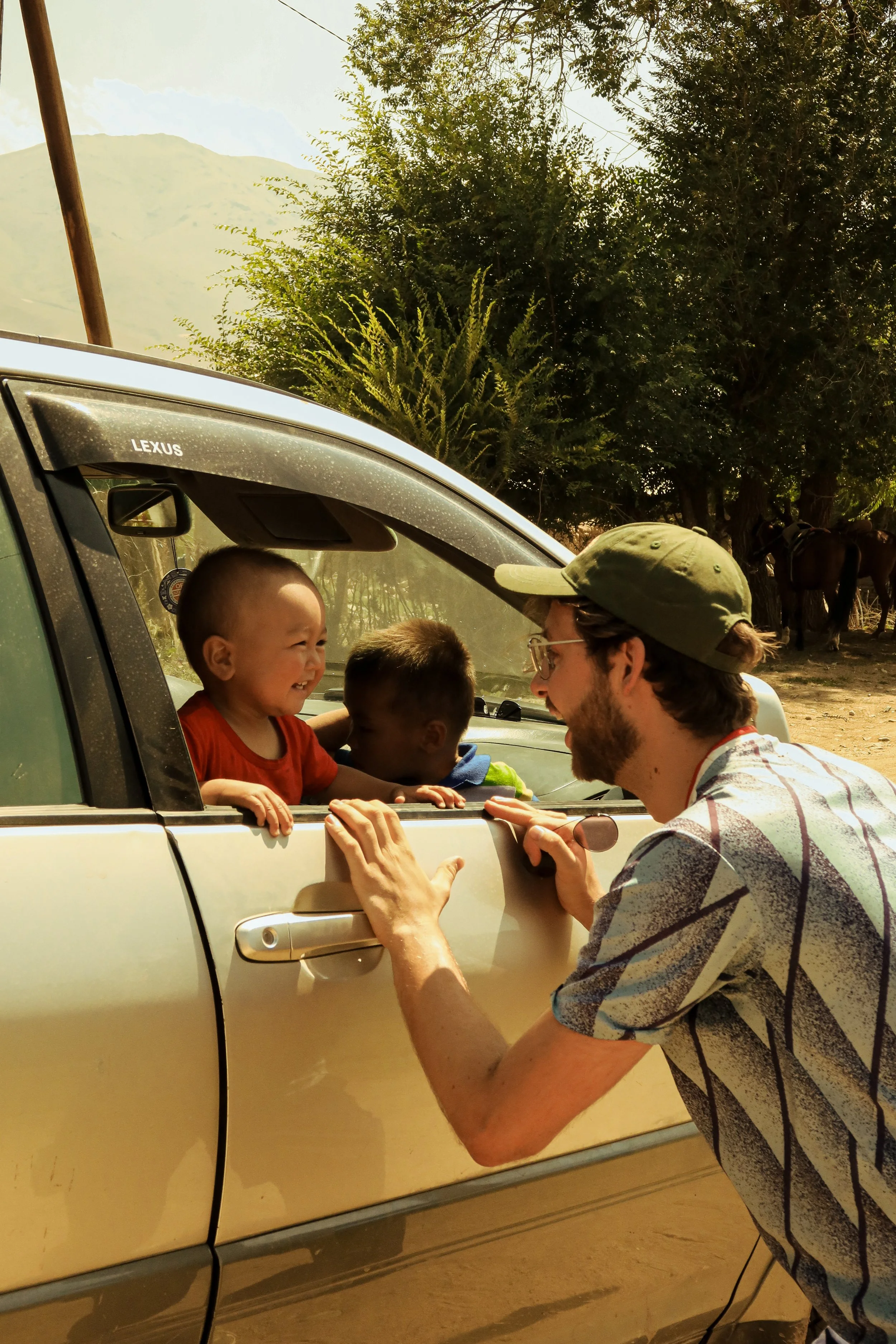
Regardless, I wouldn’t change our decision to do Song-Köl — it was exceptionally ethereal. I felt like I’d spawned into a video game, riding among wild horses through fairy-tale hills and lakes, hundreds of years in the past, on a planet that definitely wasn’t Earth.
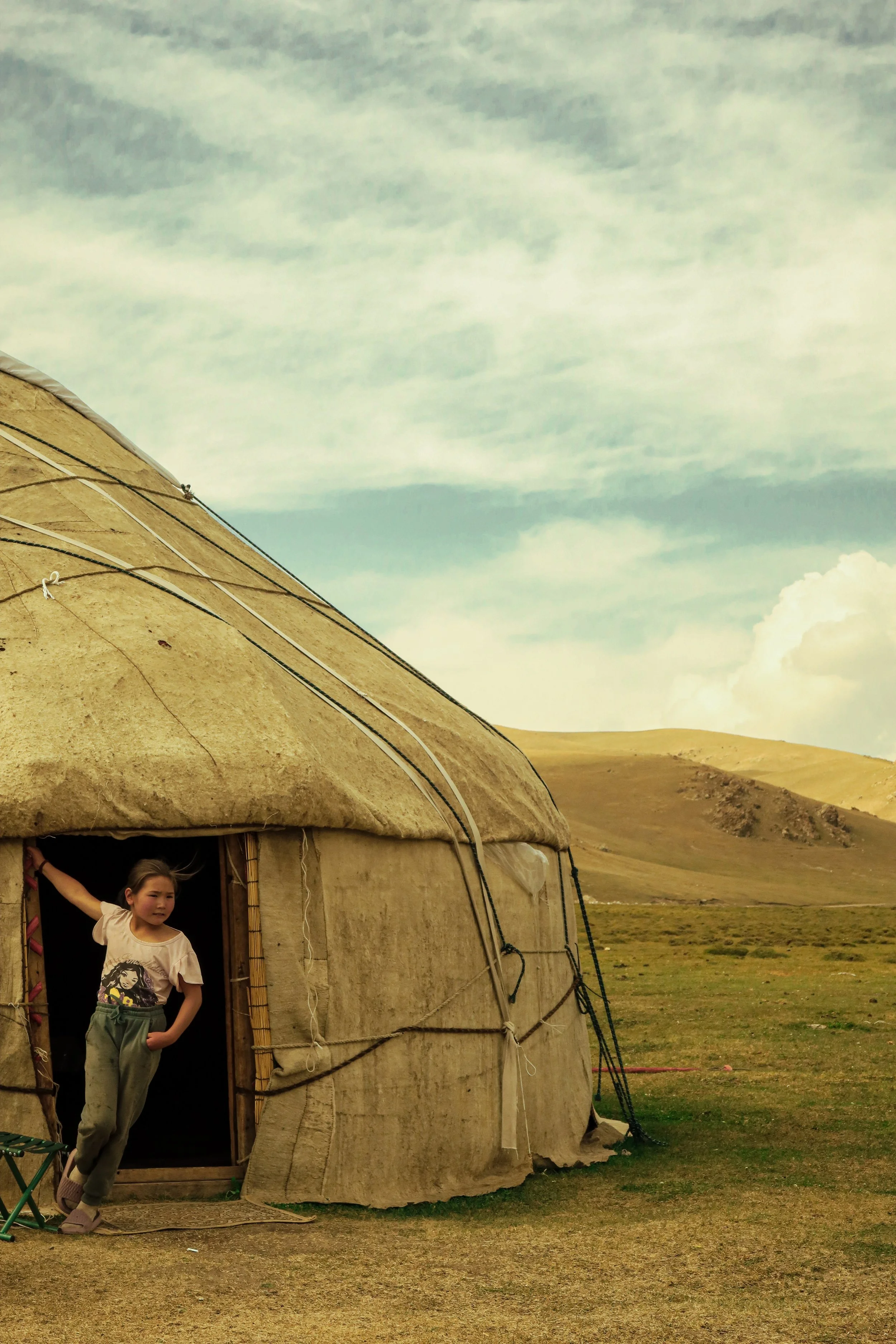
We also made some lifelong friends: two Dutch guys. Instantly, the four of us became best friends at a slumber party — laughing at hand-shadow puppets in our yurt, the air inside thick with woodsmoke and old felt, making inside jokes while swimming in the lakes. Even our horses adopted our personalities and became besties too.
Nights were for catching shooting stars and listening to the horses shuffle and snort just outside the canvas; afternoons, after arriving at each new destination, were for the local game of Gaga Ball — some modified Kyrgyz dodgeball with a mysterious purpose, no real opponents, and lots of yelling that we just rolled with and never understood.
We shared meals with other travellers, sitting in yurts around a banquet of food, washing it all down with bowls of strong, milky tea, squeezed together with laughter. We were living.
Road Trip Around Issyk-Köl Lake (1–2 Days)
We piled into the car with our new little backpacker family and hitchhiked to Issyk-Köl. On the way, we stopped at the Fairytale Canyon (“Skazka”) for a mini hike, then had a quick lunch and swim on the lake’s beach shore. The lake felt like the ocean, ringed by snow-capped mountains. Once again, it felt like another planet.
We stayed a night in Balykchy — handy to know, since this is where you catch the direct train back to Bishkek (there are no trains from Karakol).
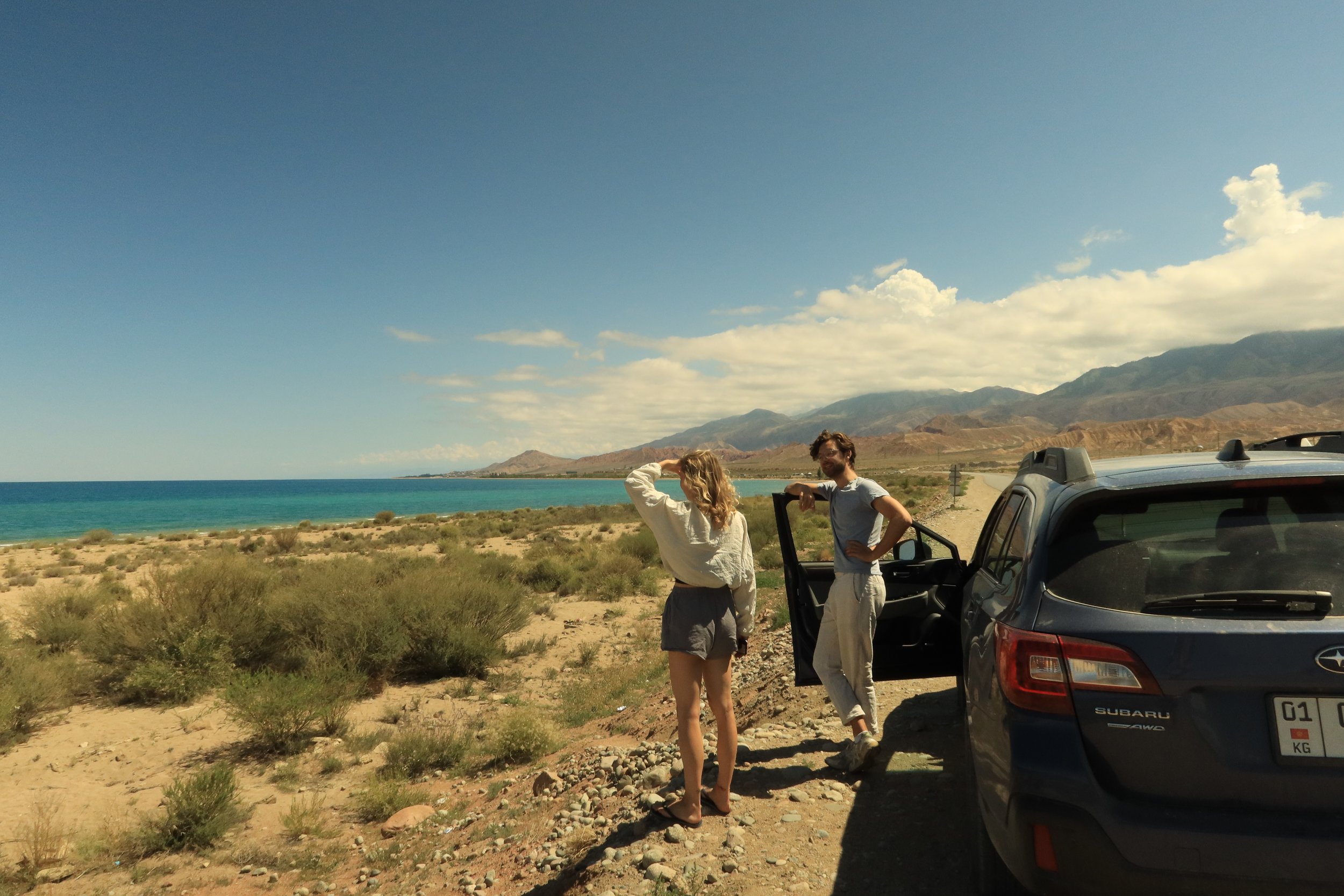
Road trip through Issyk-Köl
Karakol (2 Days, Between Each Trek)
This became our base, and we fell absolutely in love with the best guesthouse I’ve stayed at in my entire existence (not to be dramatic): By River 246.
Book Guesthouse By River 246 Here.
We liked it so much we came back four more times. It became home, truly. The guesthouse is run by a wonderful Kyrgyz family, complete with two baby kittens and a gorgeous garden, perfectly placed near town but right alongside a peaceful river for decompressing after a day of hiking. The family was kind and welcoming, spoiling us with incredible home-made breakfasts and hot-water showers — which feel like a million bucks when you’re a dirty backpacker out here.
One member of the family also runs trekking tours (contact me for his details).
The town had everything we needed — cultural markets to explore, boutique cafés at affordable prices, hiking-gear shops for essentials, and large supermarkets for food supplies. Everything was within walking distance. We usually shopped for 2–3 days’ worth of trekking essentials: oats, spices, apples, nuts, baby wipes, etc. Other travellers we met shopped for 9–10 days’ worth, so really, anything’s possible.
Our local café quickly became Sheker Café — try everything on the menu.
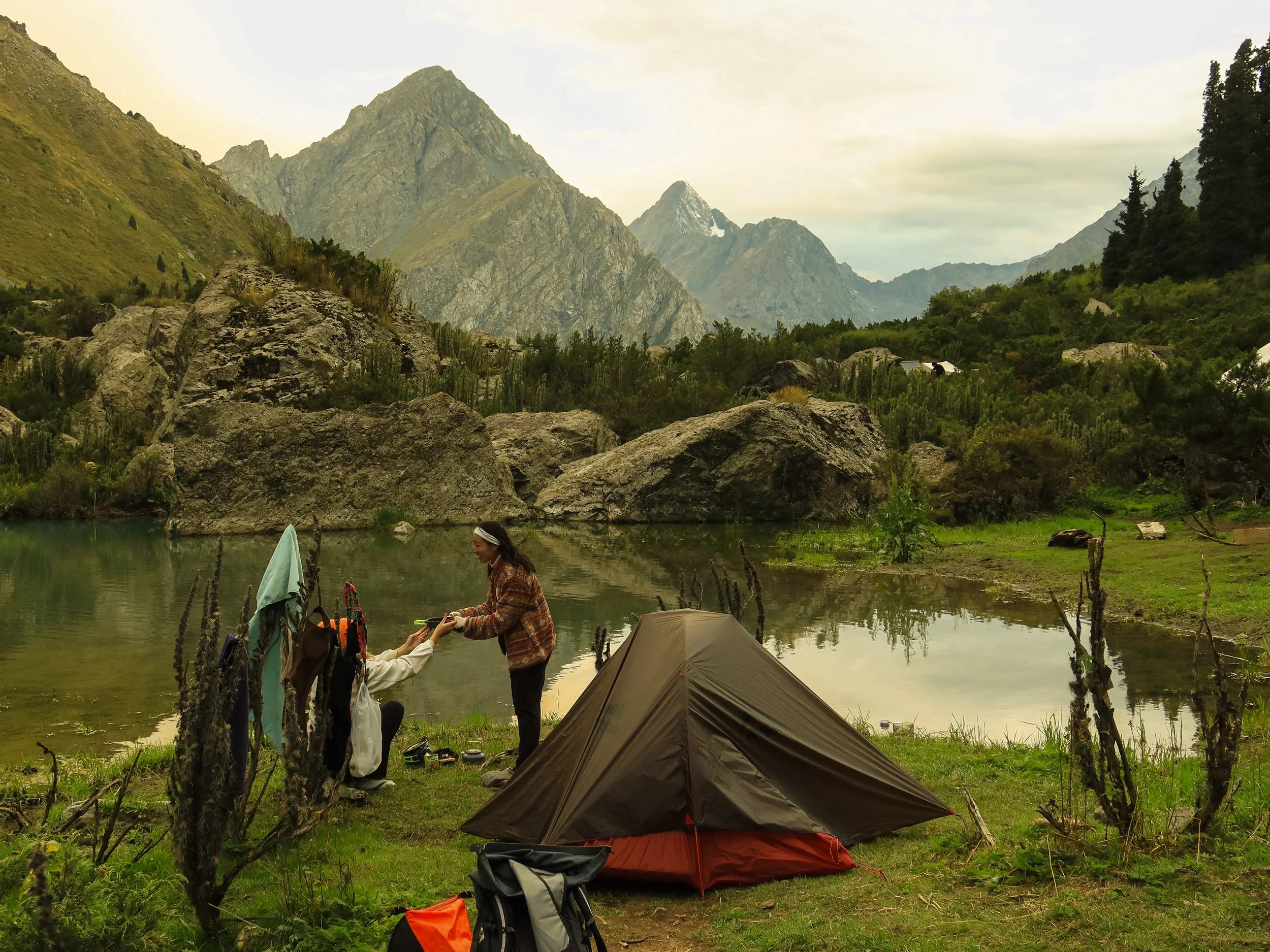
Ala Kul Trek (3 Days)
The stunning 55 km alpine route — the most famous hike in the country. And I promise it’s absolutely worth it. I wouldn’t have missed this for the world.
Day 1: Karakol to Sirota Yurt Camp (approx. 16 km / 6–8 hours). The hike starts along the river and climbs through conifer forests to reach the scenic Sirota Camp. We camped along the riverside and met some other lovely trekkers and travel influencers, who we’d end up having dinner parties with over the following week. Cold swims in the rain and boiled bean soup to finish the day. I barely slept, but had enough adrenaline to balance this the next day.
Day 2: Sirota Camp over Ala Kul Pass to Altyn-Arashan (approx. 18 km / 8–10 hours). This was the most challenging day. We woke to air so cold and thin it stung going down, then hiked past the waterfall, ascended the scree fields to the Ala Kul Pass (3,900 m) for panoramic views of the lake, then made a steep descent to the hot springs in the Altyn-Arashan valley. There were plenty of guesthouses and campgrounds to choose from, as well as hot springs — we were lucky enough to snag a private one at 9pm after dinner.
Day 3: Altyn-Arashan to Ak-Suu (approx. 16 km / 4–6 hours). A gentle descent out of the mountains, where you can catch a 4x4 back to Karakol. By this point we were so happy to be back at base. The Dutch boys went their separate ways home, so we bid them farewell — and within no time, met yet another pair, this time from South Africa.
Worth noting: I was majorly nauseous for the first couple of days, which made the uphills a little less pleasant. Still, it didn’t hold back my overloaded serotonin or the cold glacier swims one bit. Every second was truly worth it.
Ak-Suu Traverse Trek (7–9 Days)
Starts in: Jyrgalan
Lieja and I only did a couple of nights of this trek due to limited time, but began the hike alongside the South African boys, who completed the full nine days. This trek differed from Ala Kul — we barely crossed paths with other hikers, and camped in completely remote spots with not another soul around, just wild cows and horses. For the truly off-the-grid experience, I’d highly recommend making time for this one. Had we known about it earlier, or had more time, we absolutely would have completed it.
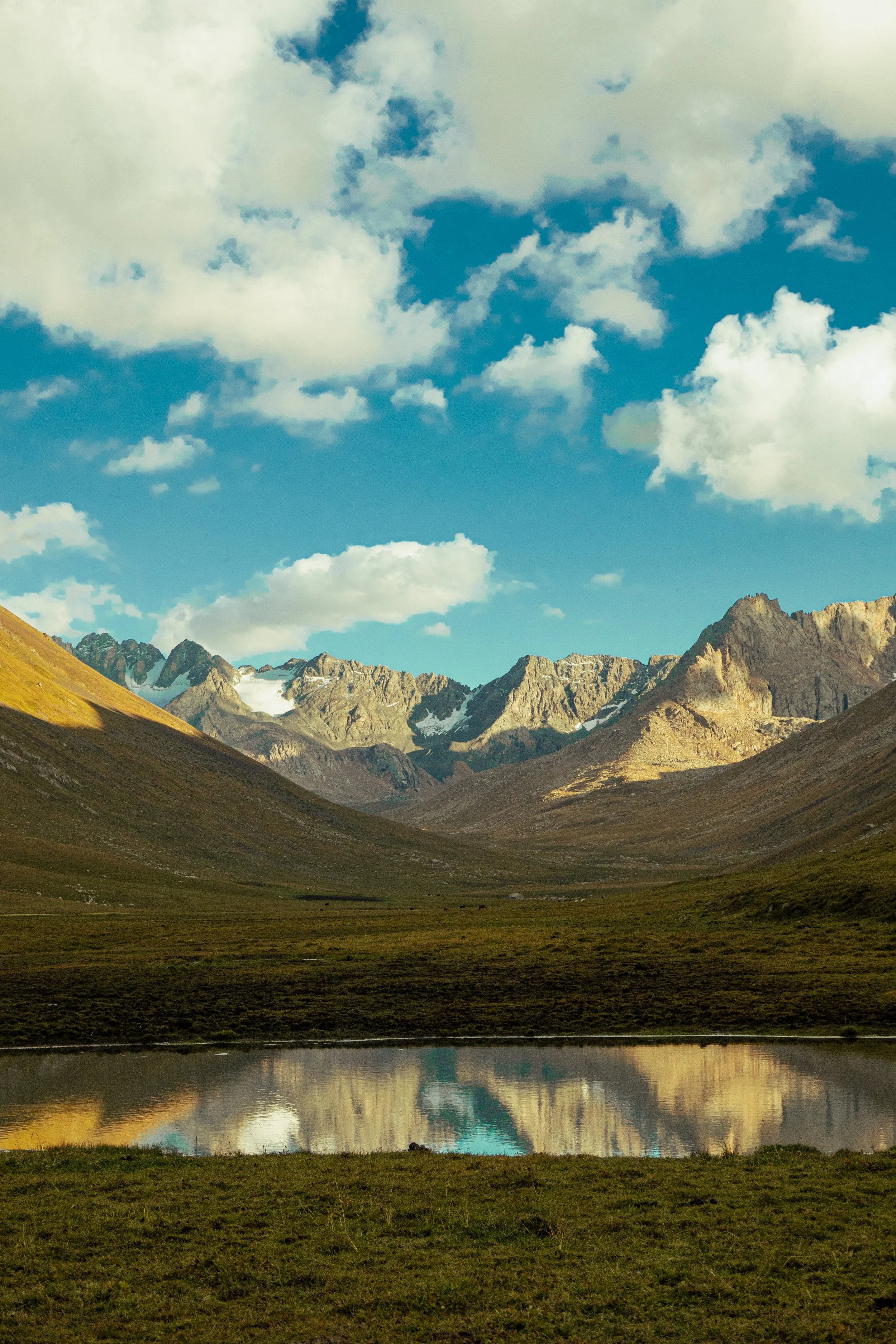
Ak-Suu Traverse was probably the most intense trek in terms of elevation gain, shoe-soaking muddy terrain, and sudden weather swings — I had six layers on and still struggled to keep warm, while our tent frosted over completely overnight. Don’t be fooled by the sunny summer afternoons.
(The rewards are so worth it).
Also, make sure one of your hiking buddies is completely on top of AllTrails / offline map prep, because this one’s easy to get lost in.
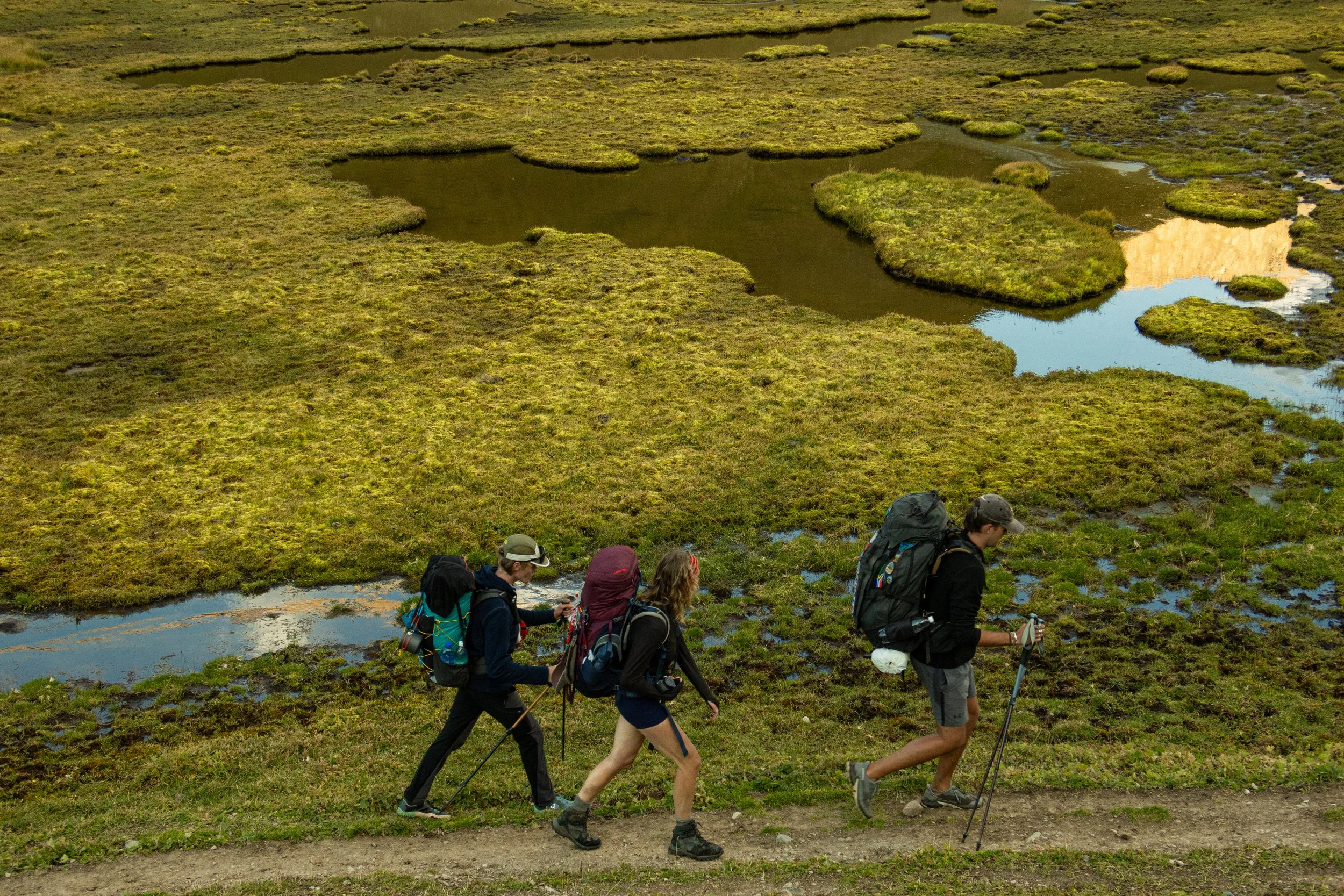
Ak-Suu Traverse Trek
Ala Kul Glacier (1–2 Days)
For our last few days of hiking and camping, we returned to Ala Kul to hike up to the glacier (you can also do this as an extra day before the full Ala Kul trek). This was our “chill girls’ hike” — cold swim showers, sunbathing, journalling, frolicking in meadows, ukulele playing, sipping coffee in the sunshine, braiding each other’s hair, etc. Oh, and eating honey cake at the glacier viewpoint, obviously.
Our finale campsite I’ll keep secret — partly because I didn’t even save where it was, since it was totally random that we stumbled on it, and that was the point. But I highly recommend doing the same: let the universe do its thing and guide you, ideally a spot with a fireplace (we manifested this and it worked), stream, and mountain ranges and alpine trees pressing in on every side. Sometimes it doesn’t matter where the journey takes you — the purpose is in the presence. These last few days may have been my favourite of the entire trip.
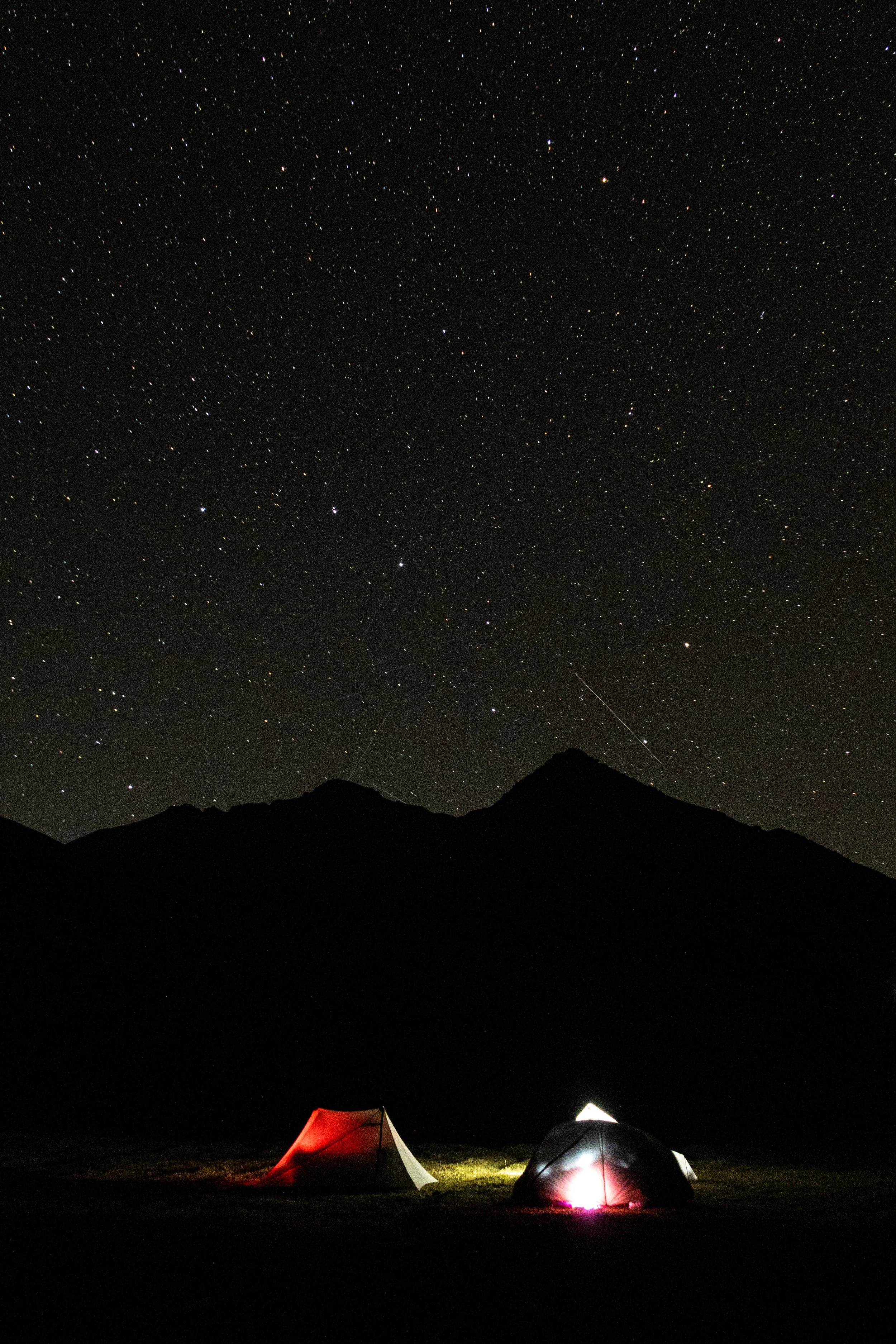
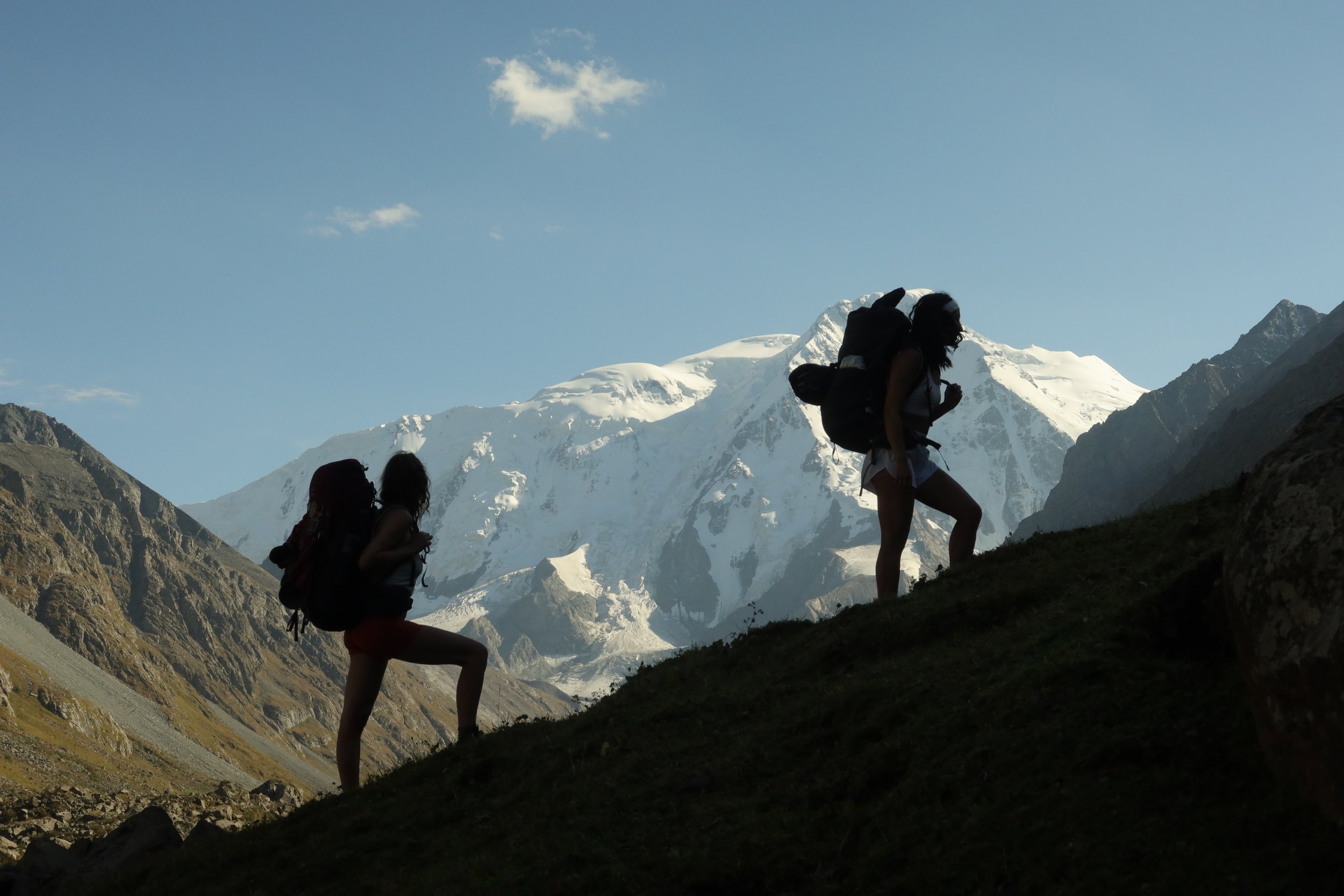
Ala Kul Glacier
Return to Bishkek
We took a marshrutka from Karakol to Balykchy after bidding farewell to our lovely guesthouse family, then caught the VIP train from Balykchy to Bishkek. This train cost only €8 and was probably the most luxurious transport I’ve ever taken — it genuinely felt like first class. We timed it with the sunset, huge windows framing what felt like a 4K cinematic film, not to mention the little Kyrgyz dance party that broke out with locals getting hammered. What an absolute highlight. It was like the ending of a movie.
We spent our last couple of days in Bishkek trying to process the crazy adventure, before saying goodbye — to each other, and to Kyrgyzstan. Satisfied was an understatement. Gratitude was all we could feel in our bones. It’s wild how much life can change in just a few weeks; we felt like different people by the time we got back to the city. Kyrgyzstan — the heart of a cinematic piece.
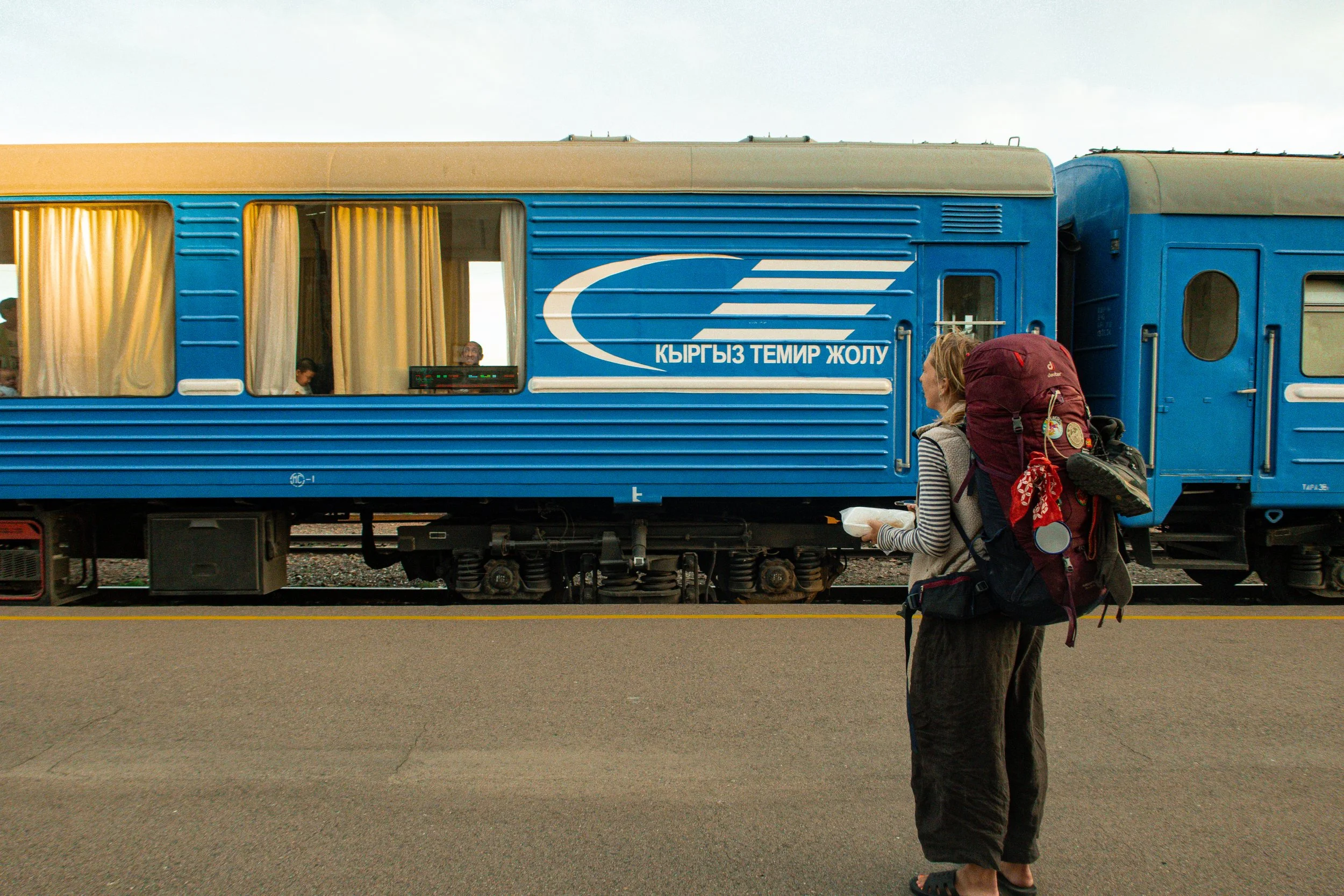
Train to Bishkek
Extra General Pointers
Money & Logistics
• Travelling here is like going back in time (that’s the point). Expect crappy, inaccurate Google Maps and almost no English, spoken or written.
• Cash, cash, cash — withdraw it all in Bishkek; options are limited in Karakol. Local currency is the Kyrgyz som (KGS). ATMs generally all charge a fee, lowest with travel cards like Revolut or Wise. Look for Optima Bank, Demir Bank, and KICB, and take out the max each time.
• Things are relatively affordable here — accommodation, food, transport, etc. Depending on your budget discipline, you can easily get a month or more out of just $1–2k.
• Again with the AllTrails and offline maps — be onto it! And if you’re lazy like me, make sure you have a Type A friend somewhere.
• Hitchhiking is SAFE and well-practised among locals and tourists alike. People here are genuinely kind, but as anywhere, keep your wits about you and listen to intuition. Some local farmers who couldn’t exchange a single word with us saved our lives in remote areas, and wouldn’t accept a dime for it (but please, always offer something to repay any kindness from locals).
• Yandex Go is used as Uber.
• Most countries allow you to be visa-free for under 30 days. Within this time, I took a 5-hour bus to cross the border to Kazakhstan (Almaty).
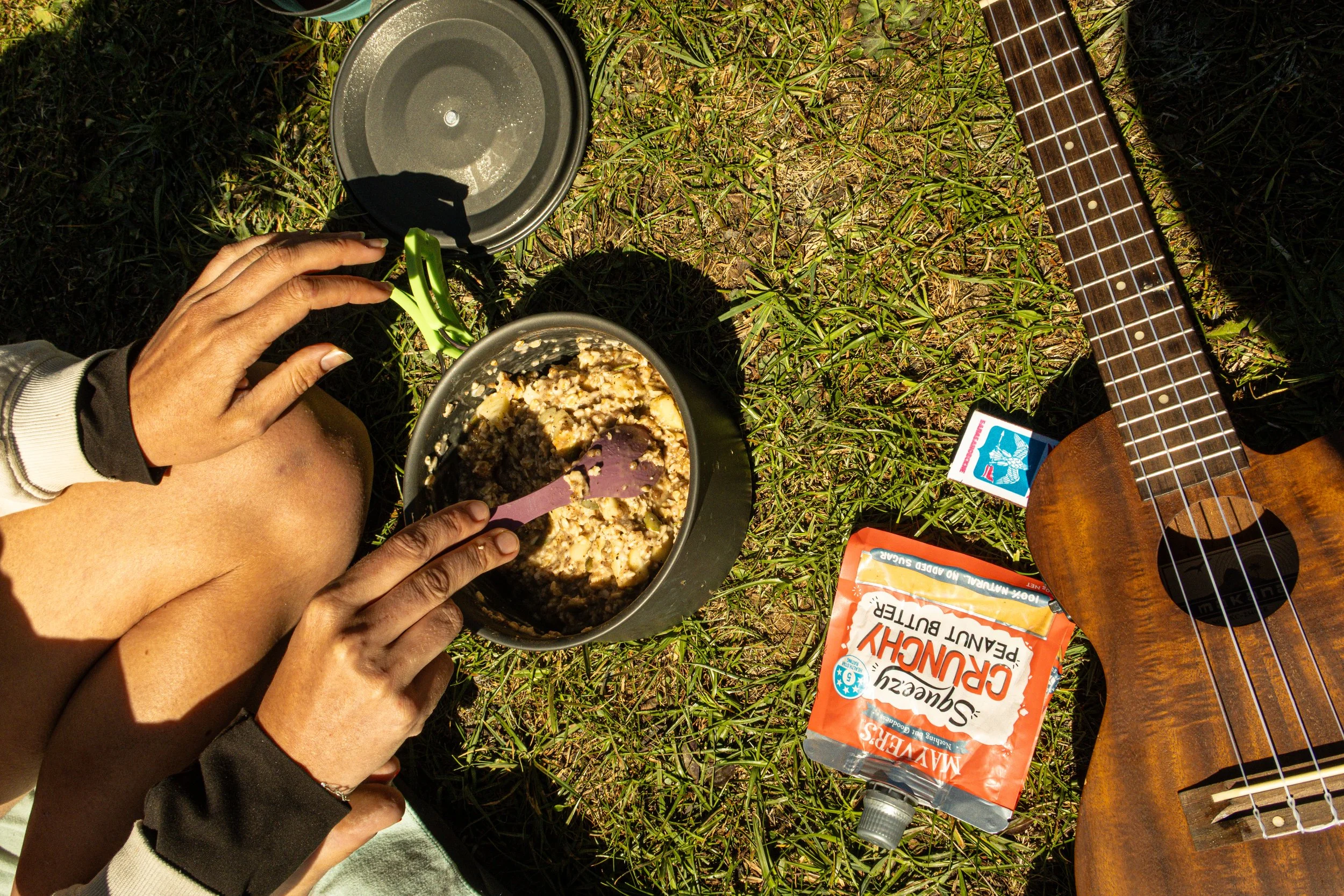
Our daily breakfast
Health & Gear
• Food poisoning is almost inevitable, unless you’re a superhuman like Lieja (genuinely — she was the only traveller we met who never got an upset stomach). Others had to fly home early because it hit them so hard. My recommendation: cook your own groceries, or eat at Western restaurants where you can. I’m usually all for trying the local food, but it might not be worth wrecking the trip over.
• If you’re doing guided treks or the Song-Köl horse trek, you’ll likely stay in yurts with breakfast, lunch, and dinner served. Be wary, depending on your immune system and what your gut can handle (out of all my travels in Asia, this was the only place that got me good). There are theories about why most travellers get food poisoning here — some blame the oils or certain cooking ingredients. Don’t let this put you off the food — most of it is homemade with love, time and effort. Try everything. If feeling off, have some back-up dry food on hand, paracetamol, Imodium, and anti-nausea tablets.
• Water tablets, a LifeStraw, Diamox, etc. — hikers, you know the drill. Clean river streams are everywhere in the Karakol region, though I’ve heard it’s different in Osh. Be prepared, and always take your meds.
• Toilet paper, baby wipes, anything you may need for frequent bush shits.
• If travelling in Kyrgyz summer (June to Sept): pack like you’re heading to the Alps and Bali at the same time — the cities get hit with humidity and sun, while nights turn frosty (we had snowfall on the Ala Kul peak). Rain gear and covers are essential. Tents are cold, but yurts are ALSO cold.
• Gear: go as lightweight as you can! We carried a two-man MSR tent, an MSR stove, a tiny pot, inflatable mats and pillows, and sleeping bags (mine was rated 0–5°C and still wasn’t warm enough). Headlamps, gloves, beanies, thick socks, a lighter, and trekking poles if needed. Other essentials, especially for comfort: Tiger Balm, Vaseline, an eye mask, and earplugs!
• Fill up your water bottles at every opportunity, like it’s your last chance.
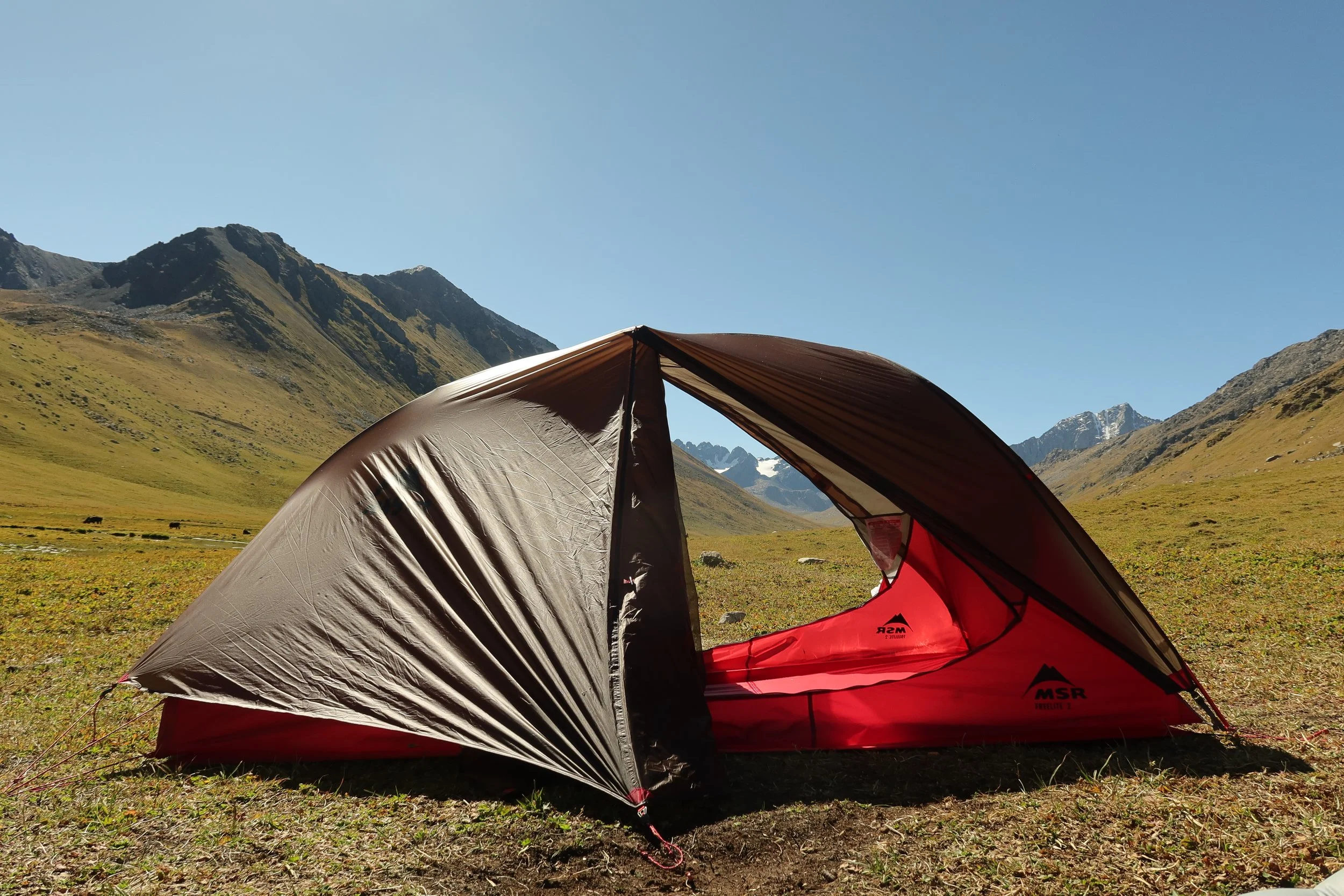
Our little house
Culture & Etiquette
• The culture is friendly and reserved — please be the respectful tourist you should be, smile and mind your manners. Learn the basics of Russian or Kyrgyz. Talk and ask questions whenever you can. Dance when invited to. Cheer with them even if you don’t understand why. The locals love the effort.
• Language — Russian is more widely used, especially in the cities; Kyrgyz takes over in remote areas. Body language is universal — don’t forget it.
• Tip: the $5 USD I gave to a lovely 16-year-old waiter who’d been practising his English with us made his entire week. That kid was over the moon. It doesn’t take much to show your appreciation to locals.
• Switch your phone off as much as you can, even if you do get signal. You don’t need it. Be present in your surroundings, and truly immerse yourself in the reason you’re here. Keep Kyrgyzstan authentic — because one day, like so many other places, it’ll get gentrified. Let’s not encourage or normalise performative travel.
• Dress modestly; although Kyrgyzstan generally lets tourists dress how they like, southern regions like Osh and the more remote mountain villages are more socially conservative. Try to cover shoulders and thighs to maintain respect and avoid unwanted stares.
• Unapologetically swim everywhere you can. Glacier waters are clean, cold and endorphin boosting. You’re in paradise — don’t miss this chance.
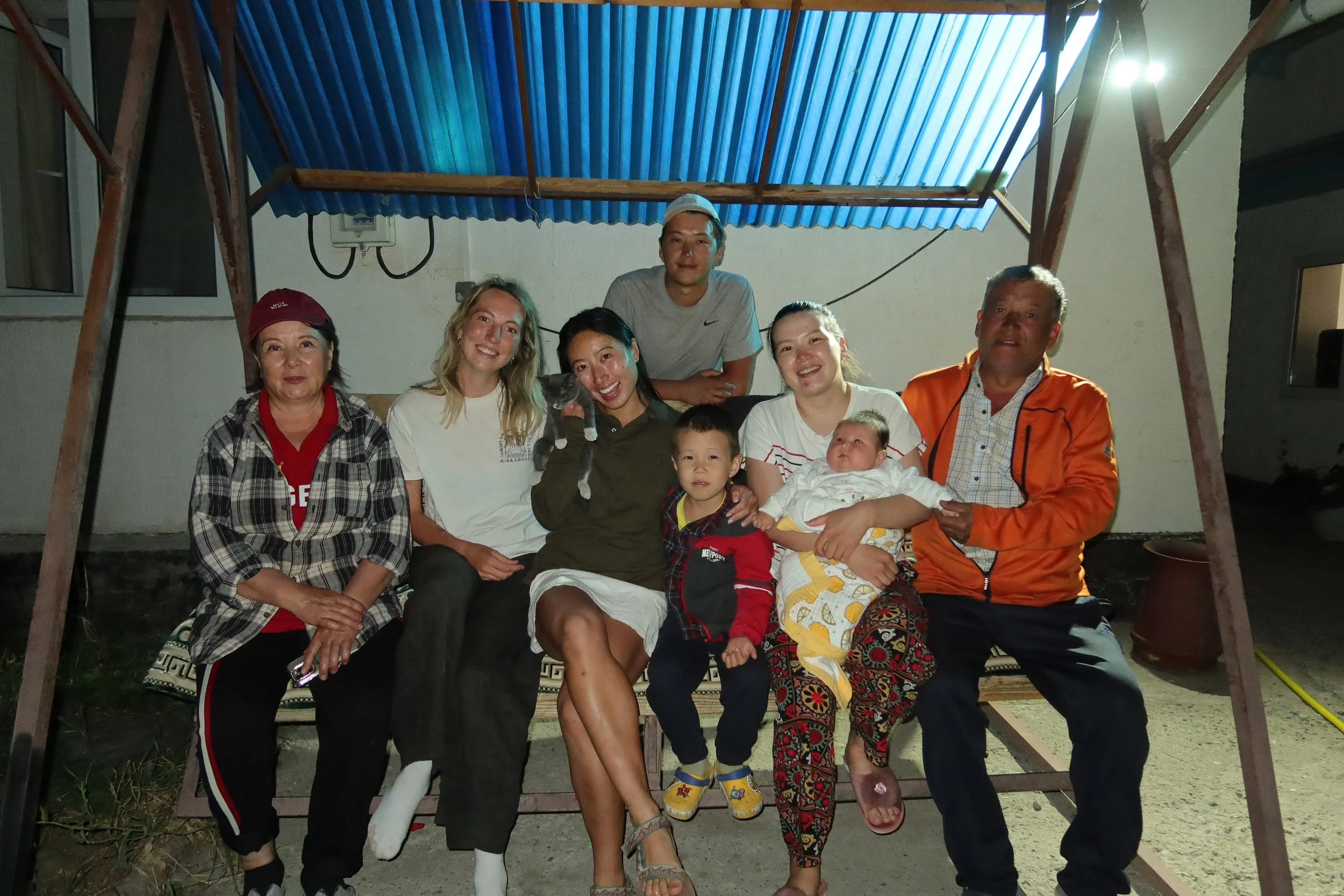
Guesthouse By River 246 Family
Other Priorities
• Try yak milk once, just to say you’ve tried it.
• Bring peanut butter from home (Australia sells the squeeze pocket packets, which are lighter than jars). This is like gold, and highly scarce in this country. The other backpackers will come to you like envious seagulls.
• Have honey cake daily. Go on a hunt for the best in the country, then come back and tell me where it was.
• Bonus: pack honey cake for your hike and eat it at the summit somewhere. This experience will change your life.
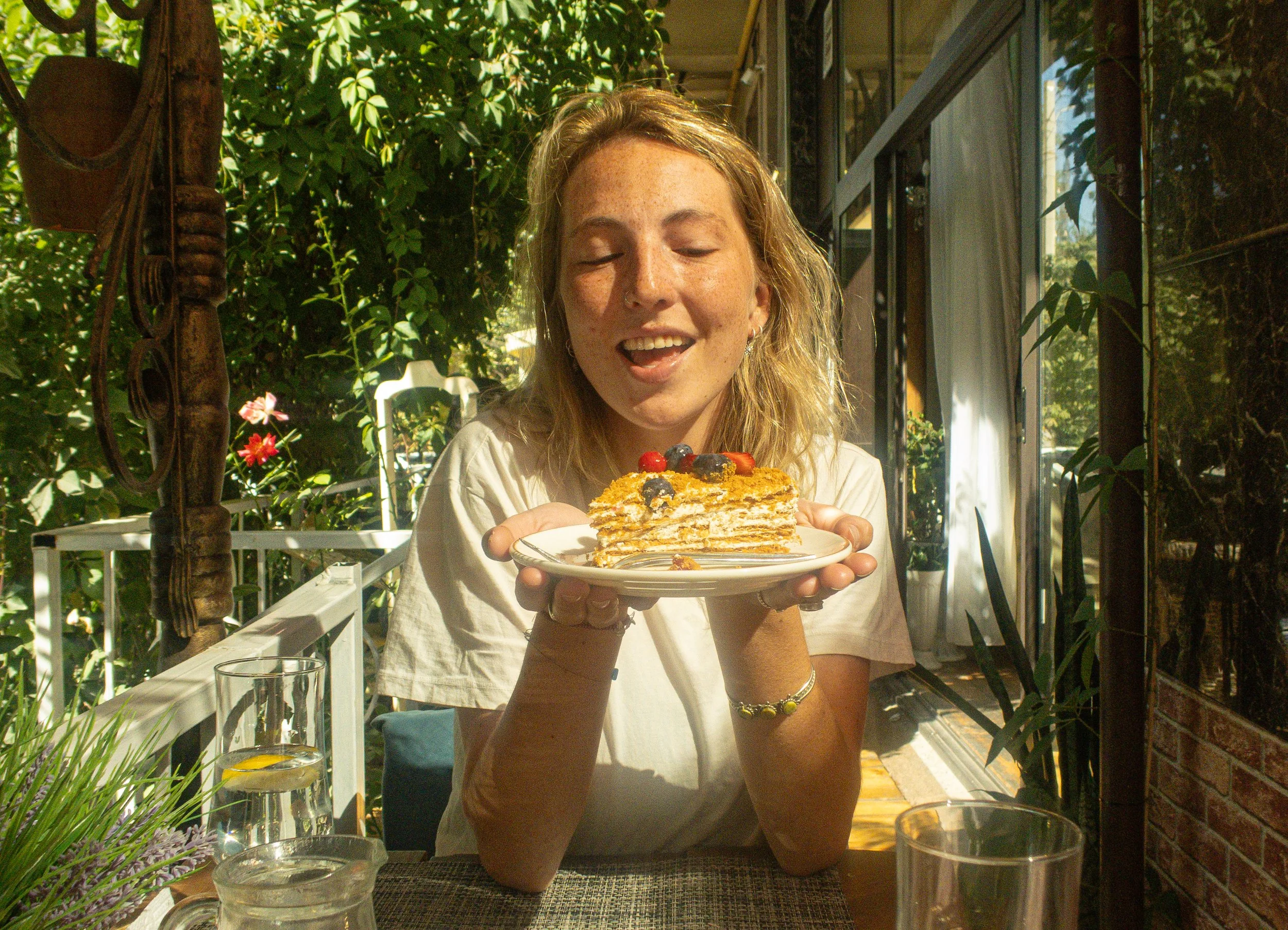
The final honey cake
For my runners: Routes are fun and creative within the cities/towns — I often ran 10km routes through different local parks and side streets, main roads and rivers. It can get truck-filled, dusty and hot, just stay hydrated and enjoy the experience. Running is possible within the hiking regions, particularly trail-running. Just be wary of the altitude.
Final note on places that we didn’t make it to, but are on the return list: Osh Region, Lenin Peak, Naryn Region, Toktogul Reservoir, Sary-Cheleck Lake and the Tian Shan mountain ranges. Ideally, you would want a couple months to truly explore the rest of Central Asia too.
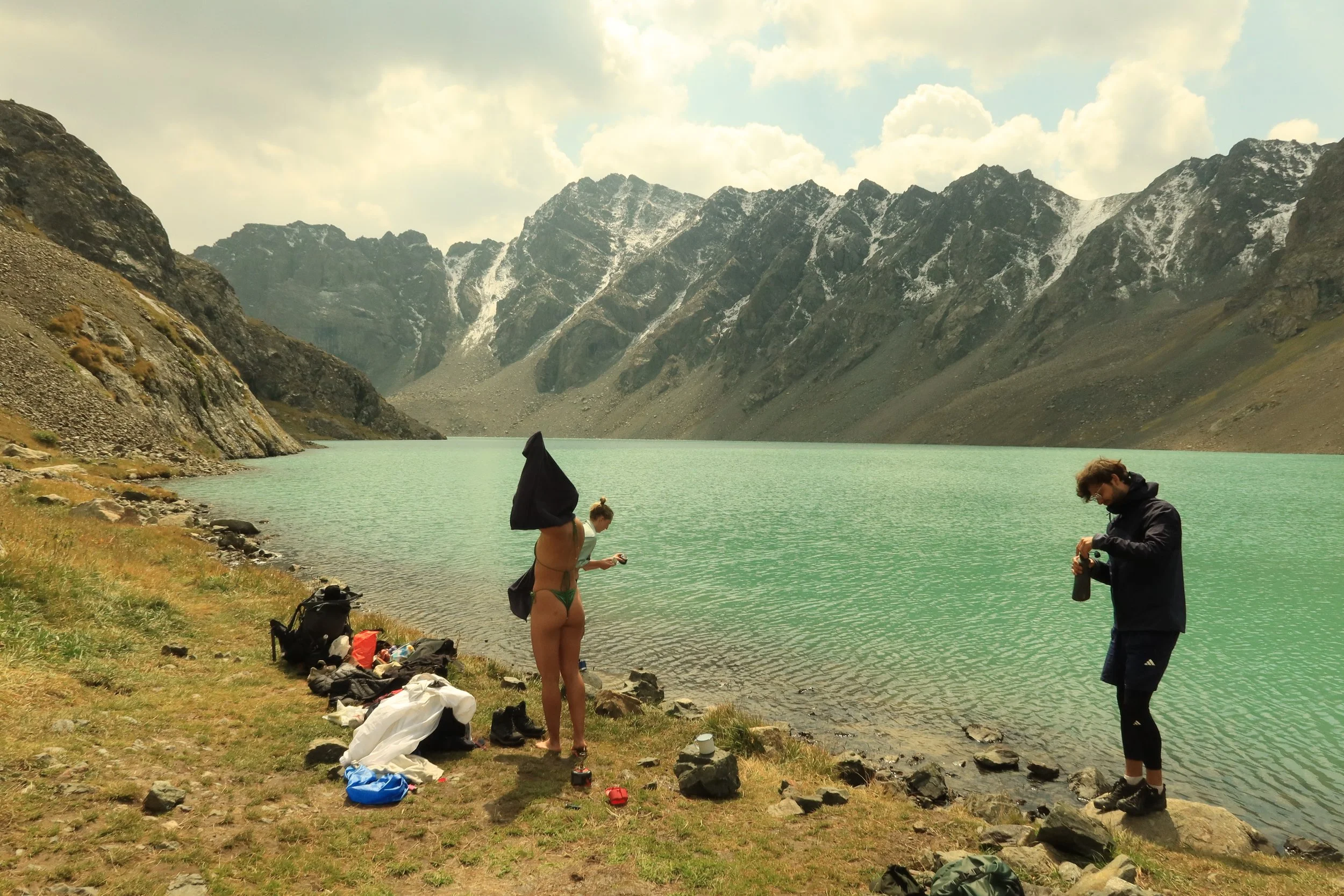
Swimming and breakfast at Ala Kul Lake
So here it is: the exact kind of trending content I claimed to have a toxic relationship with — written and shared by the very person doing the polluting. The irony isn't lost on me. But if even one of you reads this and chooses to go gently — phone down, secret campsites kept secret, and a little more honey cake eaten amid mountain views — then maybe this is the kind of trending content worth making an exception for.
Go to Kyrgyzstan.
And don’t forget a camera. Cinematic is all around you.